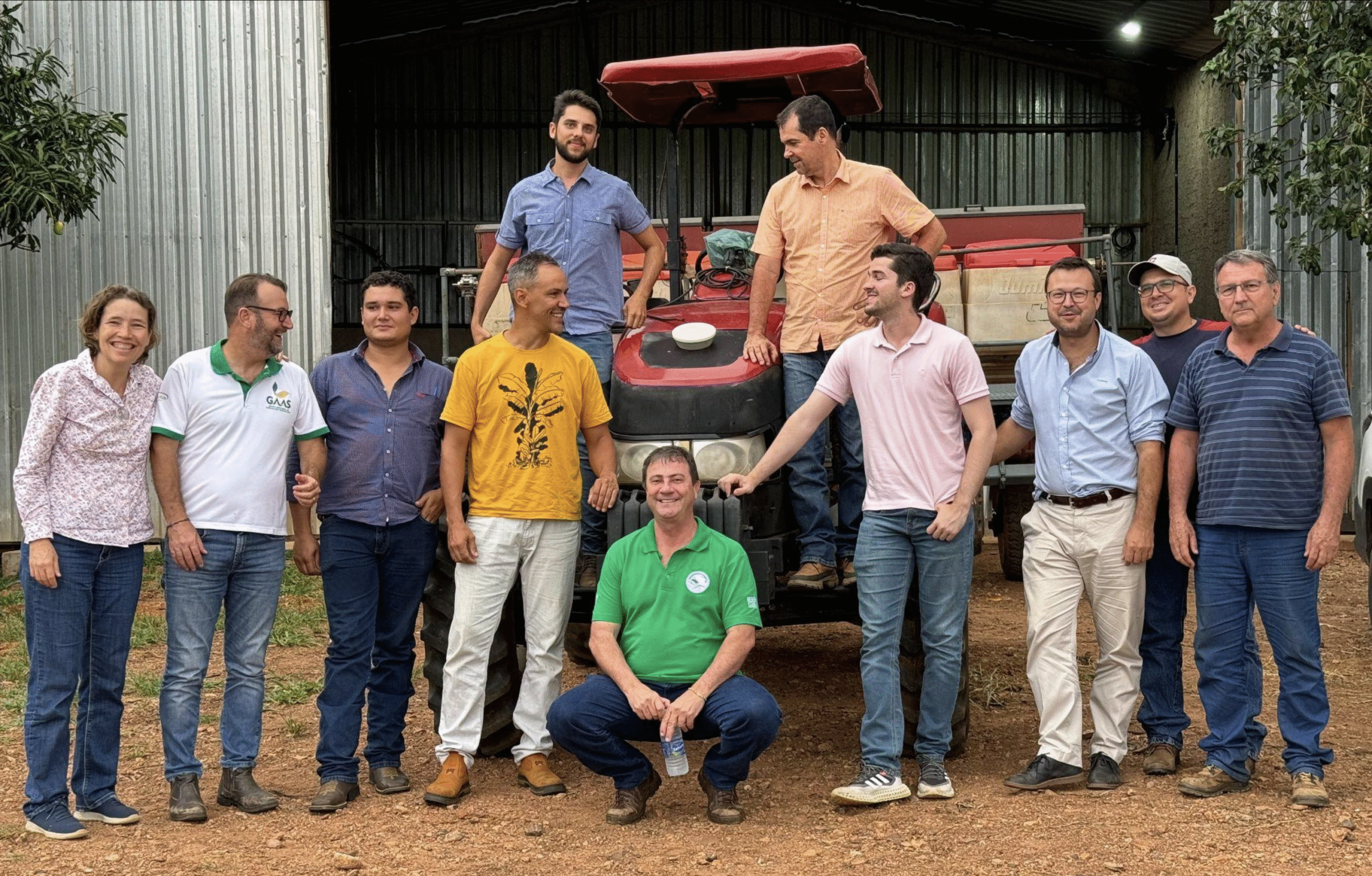
We connect the links of the chain:
producers, cooperatives, researchers, academia, industry,
and the market. We generate knowledge, exchange
experiences, and face challenges together.
The future of agriculture is organic
The future of agriculture is organic Folio connects science, producers, and the market to transform agriculture into a regenerative and organic model. The future of agriculture is organic A new design in the field: less focus on products, and more on processes. It is an agriculture of knowledge. A new design in the field: less focus on products, and more on processes. It is an agriculture of knowledge. The future of agriculture is organic

Soybeans and corn account for nearly 65% of Brazil’s total planted area.

Crop production expanded as a result of the Green Revolution, but structural changes are now necessary to build a new climate-resilient and intelligent food system.
Green Revolution

  • Excessive use of chemical inputs and soluble fertilizers
  • Physicochemical view of the soil
  • Higher carbon footprint
  • Contamination of aquifers
  • Producer dependency logic
  • Focus on the product

Regenerative
and organic

  • Biological-based solutions
  • Physicochemical-biological view of the soil
  • Greater crop rotation, cover crops, and landscape integration
  • New generation of machinery
  • Producer autonomy logic
  • Focus on the process

The agriculture that brought us here is not the one that will take us into the future.

Our work pillars

Pillars of the transition

Bioinputs

Solutions from Brazilian research institutions for tropical agriculture can reduce the use of chemicals, if effectively implemented and adapted in the field.
Our goal is to enable this transformation by promoting biologicals on farms, strengthening distribution companies, and encouraging knowledge within universities.

Genetics

Organic agriculture requires varieties adapted to living and biodiverse soils.
The challenge now is to promote improvement and genetic selection focused not only on productivity, but also on resilience and interaction with the environment, incorporating practices such as genetic rotation and the use of cover crops.

Mechanization

Adaptation of machinery for a system of annual polycultures, seeking the management of a diversity of service plants that are necessary to maintain a system that is always alive and always green, without the intensive use of chemical solutions.

Landscape Ecology

Water is the central input of agriculture, and its availability depends on living landscapes capable of capturing, infiltrating, and retaining this resource. Caring for springs, protected areas, and legal reserves is not just about complying with an environmental obligation — it is about ensuring water resilience, productivity, and the continuity of agriculture itself.

Our area of operation

How we are transforming the future

We connect the links of the chain: producers, cooperatives, researchers, academia, industry, and the market. We generate knowledge, exchange experiences, and face challenges together. Tropical organic grain agriculture still generates many uncertainties. Folio accelerates answers. Everything is 100% open source, meaning our knowledge is open to everyone.

Financial solutions for bioinput companies

Construction of new agronomic models

Research development and data generation

Support for the creation of transition businesses

Training for on-farm biological production

Field days and workshops

Organic Grains Forum

Support for changes in public policies

Initiatives

KATU

KATU

GAN

GAN

Percepa

Percepa

Tropical Transition

Tropical Transition

Who is telling our story?